As the racing season continues to ramp up, many athletes are in the midst of training for their big race of the season which often is an IRONMAN 70.3 or an IRONMAN triathlon. Training when going long means making every workout count, not just completing them. Fuelling your training is critical to your success in training and ultimately on race day.
Endurance workouts like long rides, runs, brick sessions, and consecutive training days put significant stress on the body. For long-course triathletes, fuelling during training is essential, not optional. Research repeatedly highlights how vital it is for triathletes to keep their glycogen levels up, consume sufficient carbohydrates and remain properly hydrated to optimise both performance and recovery.
The mistake many athletes make is saving all their nutrition focus for race day. In reality, race-day nutrition starts in training.
Sports nutrition requires individual strategies; fuelling every triathlon session the same way is a common misconception.
Nutrition requirements vary depending on the duration, intensity and purpose of each training session. For example, a short and easy recovery spin does not require the same fuelling plan as a five-hour ride with intervals. Similarly, a steady aerobic run is distinct from a long brick session where the focus is on practising race-day pacing and nutrition strategies.
Scientific evidence supports an individualised approach to carbohydrate intake for triathletes, tailored to the intensity, duration and specific demands of each training phase. These needs also evolve throughout the season, so a winter base week should not be fuelled in the same way as a peak IRONMAN build. Adjusting nutrition strategies ensures that athletes are adequately fuelled for the unique requirements of every session. For IRONMAN 70.3 and IRONMAN athletes, carbohydrate remains the key fuel during longer sessions.
That does not mean every athlete needs the same amount, but it does mean under fuelling long training is one of the easiest ways to compromise quality. If carbohydrate intake is too low, pace can drop, decision-making can get worse, power can fade and the final third of the session often becomes survival rather than productive training.
This matters because the point of key sessions is not just to get tired. It is to train at the intended effort, practise your pacing, and finish in a way that supports adaptation rather than digging an unnecessary hole.
In other words, long-course athletes should not be asking, “Can I get through this session on less?” The better question is, “What intake helps me complete this session well and recover ready for the next one?”
For athletes training to go long, carbohydrates serve as the primary fuel source during extended workouts. While the quantity of carbohydrates required may differ from athlete to athlete, the significance of adequate fuelling during long training sessions cannot be overstated.
Insufficient carbohydrate intake is one of the simplest ways to reduce the quality of your training. When carbohydrate levels are low, athletes may experience a noticeable drop in pace, diminished decision-making abilities, and fading power output. Often, the latter stages of the workout transition from productive training into a struggle simply to finish.
The objective of crucial training sessions is not merely to induce fatigue. Instead, these sessions are designed to help athletes train at the desired effort, practise their pacing strategies and conclude in a manner that promotes positive adaptation, rather than leaving them unnecessarily depleted.
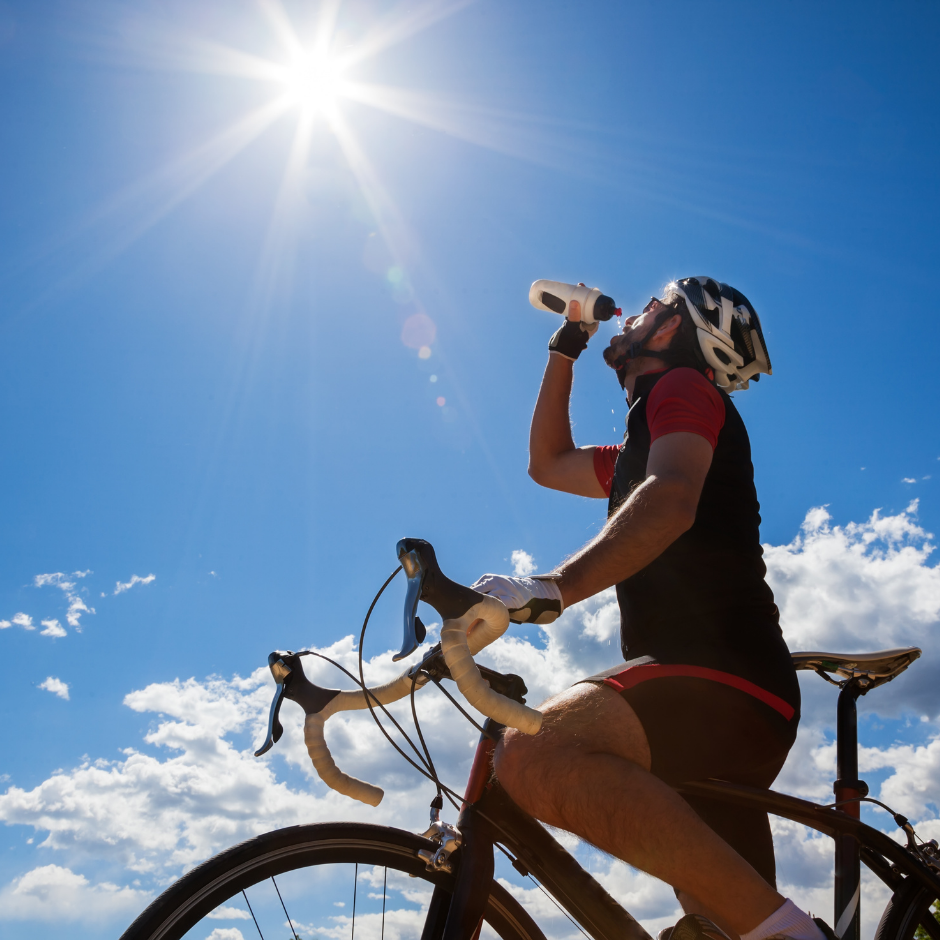
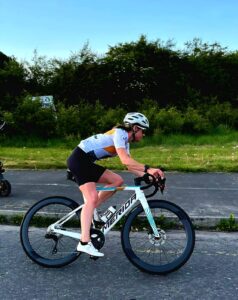
The bike is the optimal spot to focus on training nutrition. Cycling gives you the best opportunity to take in carbohydrate and fluid with less mechanical stress than running. It is also where most athletes can practise their race fuelling most consistently. Bottles, drink mixes, bars, chews, and gels can all be trialled on the bike to see what is realistic, comfortable, and repeatable.
Long-course races, often get derailed due to nutrition issues, not a lack of fitness. Athletes may struggle to keep up with carb intake or start the run low on fuel and hydration.
Use long rides to practice:
What works on the bike does not always work on the run. Running creates more mechanical jostling and gut comfort often becomes a bigger issue as intensity rises or fatigue builds. That is why long runs and brick sessions are important opportunities to test not just whether you can take in fuel, but whether you can absorb it comfortably.
This is where athletes often discover that the most aggressive plan on paper is not necessarily the best one in practice. Research has shown that different carbohydrate formats may lead to different gastrointestinal responses, and that more concentrated strategies can create problems if they are not tolerated well.
Fuel and hydration go hand in hand, especially for long-course athletes. It’s crucial to monitor fluid intake during training, hot weather and lengthy indoor sessions can lead to significant sweat loss. Research links hydration to performance but warns against over drinking. Sodium-containing drinks are often beneficial; water alone may not suffice for longer workouts.
Training helps you find your ideal fluid plan:
A smart hydration strategy enhances performance while avoiding discomfort or overconsumption.
For triathletes competing in long-distance events, fuelling during workouts is just part of the equation, recovery afterwards is equally essential. Research shows that post-exercise carbohydrates help restore glycogen, while protein aids in muscle repair and adaptation. This becomes especially critical during periods of intense training when sessions are scheduled back-to-back.
In other words, your long ride isn’t finished when your Garmin stops recording. If you end your workout feeling drained and postpone refuelling for several hours, you’ll likely notice its effects the following day: fatigue, low energy and poorer performance.
For those preparing for an IRONMAN 70.3 or IRONMAN, maintaining recovery is crucial. Recovery nutrition isn’t simply about feeling good after exercising, it’s about ensuring you’re ready for your next session.
Some endurance athletes believe under fuelling makes workouts more effective, but harder sessions aren’t always better. Long-course triathlon requires significant energy, so it’s smarter to fuel adequately for key sessions, practice your race-day nutrition plan, and support recovery for consistent training.
For long distance triathletes, training nutrition is not separate from race nutrition, it is where race nutrition is built.
Use long rides to practise carbohydrate and fluid intake.
Use long runs and bricks to test gut tolerance. Match your fuelling to the session rather than using the same approach every day.
And remember that the goal is not simply to survive training, but to fuel in a way that helps you complete key sessions well and recover strongly enough to keep progressing.
Sources
Jeukendrup, Asker E., Roy LPG Jentjens, and Luke Moseley. “Nutritional considerations in triathlon.” Sports Medicine 35, no. 2 (2005): 163-181.
Miguel-Ortega, Álvaro, María-Azucena Rodríguez-Rodrigo, Juan Mielgo-Ayuso, and Julio Calleja-González. “Triathlon: Ergo Nutrition for Training, Competing, and Recovering.” Nutrients 17, no. 11 (2025): 1846.