Hydration in triathlon is not simply about drinking more water. It is about finding the right balance to support performance, maintain gut comfort and avoid the two extremes that can derail race day: dehydration and over drinking.
In endurance sport, getting hydration wrong can affect not only pace and energy levels, but also decision-making, comfort and overall race execution.
Fatigue in triathlon is most often caused by dehydration and carbohydrate depletion, which can lower energy levels and impair performance. During longer races, the risks become greater, with hyperthermia (overheating) and hyponatraemia (dangerously low blood sodium) representing more serious concerns. These conditions can result in confusion, muscle cramps or even collapse. Effectively managing these factors is vital for both performance and health.
There is no one size fits all answer when it comes to fluid and sodium needs in triathlon. Complete replacement of sweat losses is not necessary, and some body mass loss during a race is expected. However, significant losses can impair performance, while drinking too much brings its own dangers.
Hydration plans should always be individual. A sprint race on a cool day is very different from a long-course event in the heat, and athletes also vary in sweat rate, sodium losses, and gut tolerance. Rather than copying someone else’s bottle plan, triathletes should build and practise a strategy that matches their own physiology, race distance, and conditions. The best time to do that is in training, where drink choice, bottle set-up and timing can all be assessed before race day. Poor hydration management does not just make you slowe, it can also increase the risk of avoidable problems later in the race.
Before competing, the guideline is to drink around 400–600 ml of fluid approximately two hours before the start. This helps ensure you begin well hydrated without feeling uncomfortable or overfull.
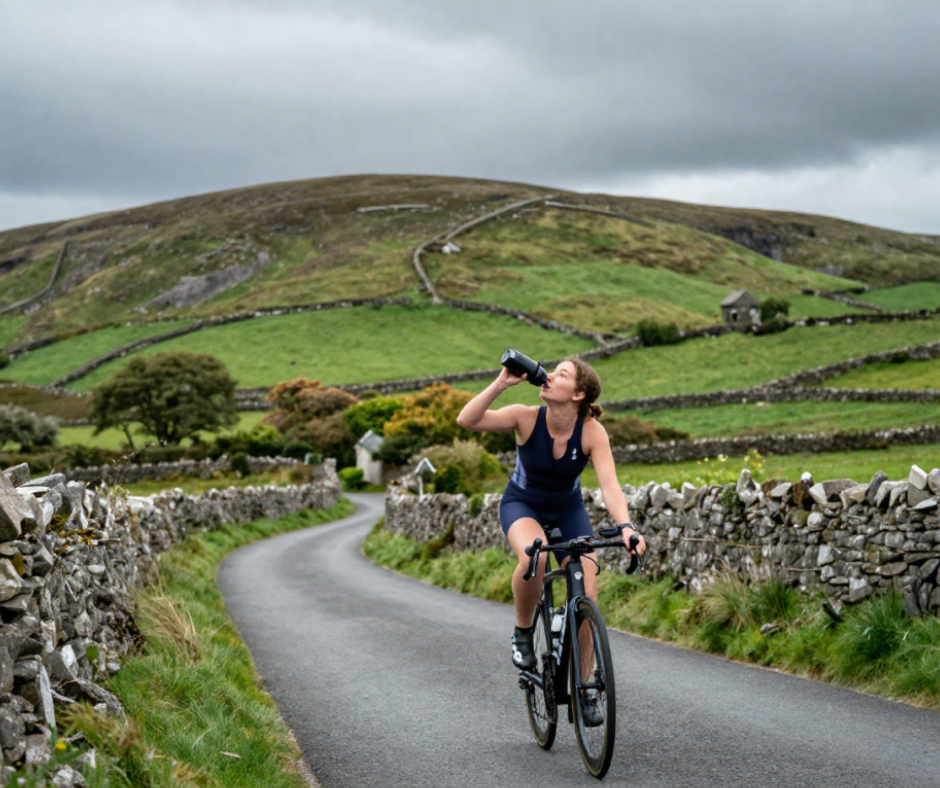
The most effective time for triathletes to take in fluids during competition is on the bike. Drinking during the swim is impossible, and drinking on the run can cause stomach discomfort, making the cycling segment the practical window for maintaining hydration.
This is also why practising your race plan matters. Your hydration strategy should be rehearsed in training using the same bottles, sports drink, sodium products and timing you intend to use in competition. Race day is not the moment to discover that a drink is too strong, a bottle is awkward to use, or your stomach cannot tolerate the amount you planned to consume.
Sodium is essential for triathletes. It is recommended that drinks consumed during exercise contain 30–50 mmol/L of sodium. This concentration improves fluid absorption and helps prevent hyponatraemia.
Hyponatraemia typically affects slower athletes in longer events, developing when sodium lost in sweat is replaced with excessive water or low-sodium drinks. In other words, triathletes do not just need fluid, they need the right kind of fluid.
More sodium is not necessarily better. The practical message is to use a sports drink containing sodium, avoid relying solely on water during long races and refrain from drinking so much that body weight is maintained or increased.
Gut comfort is equally important. Gastrointestinal issues are common in long-distance triathlon, often linked to highly concentrated carbohydrate drinks, hyperosmotic solutions and poor fluid tolerance. A hydration plan must be absorbable under race stress.
That is another reason why hydration should be assessed in training. Athletes can learn a lot by paying attention to thirst, bloating, stomach sloshing, body mass changes and how well they tolerate different drinks during longer sessions. Small adjustments made in training are usually far more useful than last-minute changes on race morning.
After the race, rehydration should be intentional. It is recommended to consume about 150% of body mass lost, using drinks with a high sodium content (more than 60 mmol/L) to aid fluid
retention.
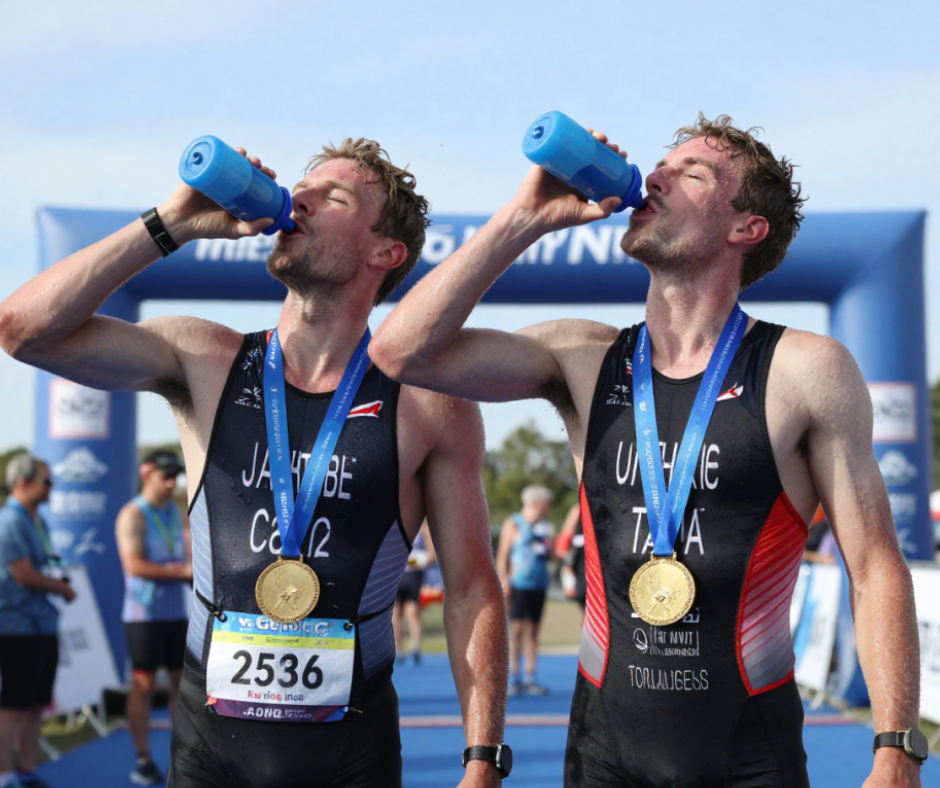
To summarise, begin your race hydrated, take in most of your fluids during the bike segment, choose drinks that contain sodium, and avoid both dehydration and over drinking. Most importantly, remember that hydration should be individual and practised in training, not guessed on race day.
For triathletes, the aim is not to drink as much as possible, but to drink enough to optimise performance, protect gut health and prevent hydration from becoming a problem in itself.
Jeukendrup, Asker E., Roy LPG Jentjens, and Luke Moseley. “Nutritional considerations in triathlon.” Sports Medicine 35, no. 2 (2005): 163-181. https://doi.org/10.2165/00007256-200535020-00005
Miguel-Ortega, Álvaro, María-Azucena Rodríguez-Rodrigo, Juan Mielgo-Ayuso, and Julio Calleja-González. “Triathlon: Ergo Nutrition for Training, Competing, and Recovering.” Nutrients 17, no. 11 (2025): 1846. https://doi.org/10.3390/nu17111846