People often associate protein with gym training and muscle building, but for triathletes it has a much broader role. Long rides, hard runs, brick sessions, and strength training all create a need for repair and recovery. So how much do you actually need, when should you eat it, and is a protein shake really necessary after every session?
Every training session creates a need for recovery. Long rides, hard runs, brick sessions, and strength work all challenge muscle tissue. Protein provides the building blocks the body needs to repair and rebuild after that training.
This is especially important during periods of heavier training, when sessions may be stacked closely together and recovery time is limited.
Recent endurance-specific research suggests that intakes around 1.8 g/kg/day may be appropriate for many endurance athletes, particularly during heavier training periods. That means a 70 kg triathlete might aim for roughly 125–130 g of protein across the day.
You do not need large servings of meat or several protein shakes; it is much easier to meet your needs by spreading protein across meals and snacks.
Rather than eating very little protein during the day and trying to catch up at dinner, aim to include it consistently across meals and snacks.
Breakfast might include eggs, yoghurt, or milk. Lunch could include chicken, tuna, tofu, or beans. Snacks might include yoghurt, milk, cheese, nuts, or a protein shake when convenient.
Each meal does not need to contain an exact amount of protein. The bigger priority is meeting your overall needs and including protein consistently across the day.
You do not need to weigh every gram of protein you eat. As a rough guide, the following portions provide around 25–30 g of protein:
After a hard or long session, protein is important, but it is not the whole recovery story.
Triathletes also need carbohydrate to replace the fuel used during training. This is especially important after long rides, long runs, brick sessions, or hard interval work.
A useful way to think about recovery is:
Protein helps repair. Carbohydrate helps refuel.
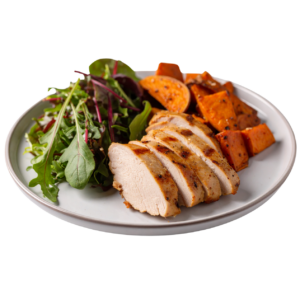
A good recovery meal should therefore contain both. Examples might include:
The key is not to focus so heavily on protein that carbohydrate gets forgotten.

Probably not as urgently as you may have been led to believe.
You may have heard about the so-called “30-minute recovery window”, the idea that if you do not drink a protein shake immediately after training, you have missed your opportunity.
For most triathletes, your total protein intake over the whole day matters more than getting a shake in within an exact number of minutes. If you are able to have a proper meal soon after training, that may be all you need.
Timing matters more when another demanding session is coming up soon. If you have a hard morning session followed by another session later that day, eating sooner makes sense because you have less time available to recover.
Protein gets a lot of attention in sport, but for endurance athletes, carbohydrate is still essential.
Research looking at recovery after exercise shows that adding protein to post-exercise snacks/meals does not appear to improve muscle glycogen replacement when enough carbohydrate is already being consumed.
In simple terms, eating extra protein does not replace the need for carbohydrate.
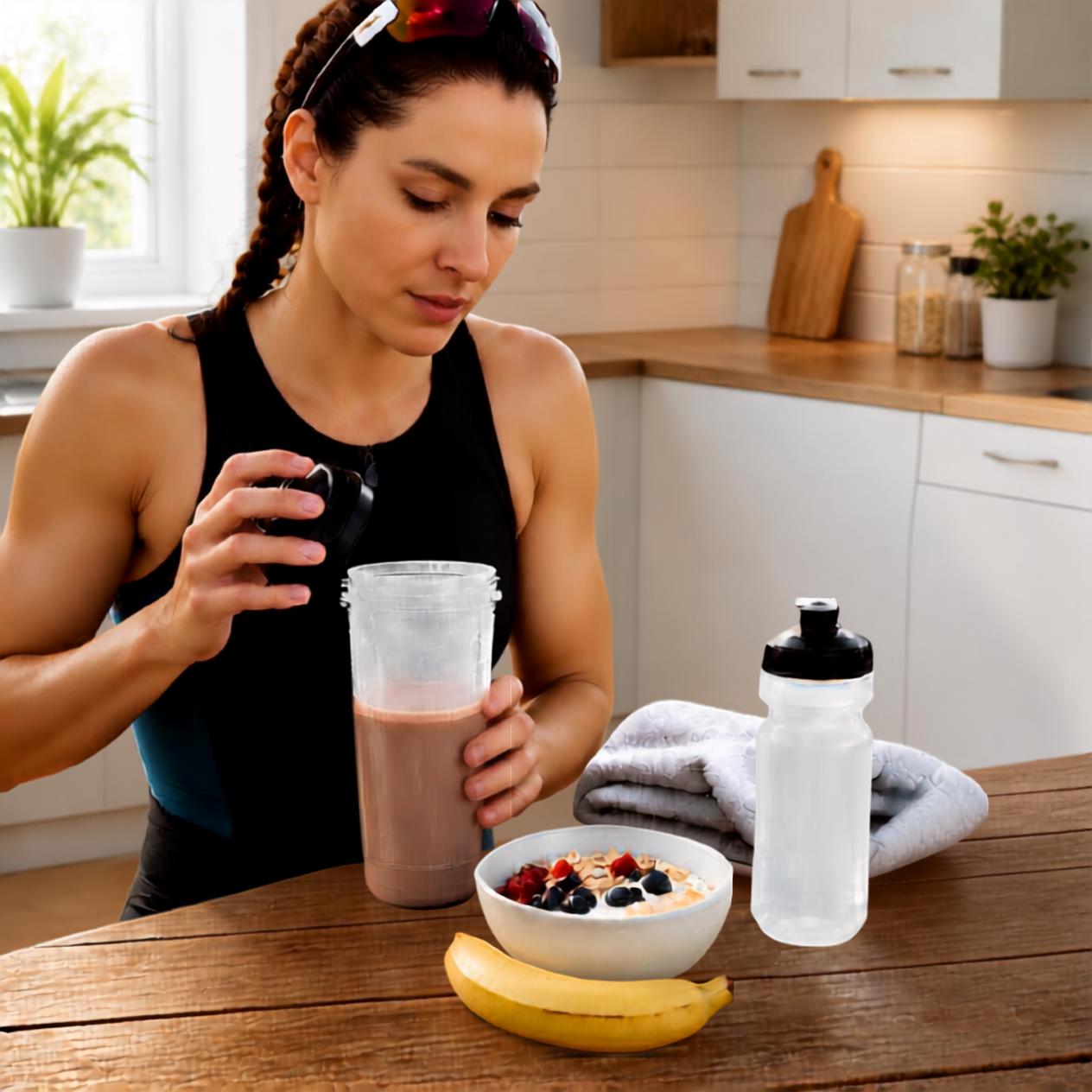
After a long endurance session, a protein shake on its own may therefore not be enough. A shake made with milk, fruit and oats, for example, gives you both carbohydrate and protein and may be more useful than protein powder mixed with water alone.
Will protein stop me feeling sore?
Not necessarily. Protein supports muscle repair, but it will not reliably prevent post-training soreness. Soreness is influenced by training load, sleep, total energy intake, hydration and rest.
For triathletes, protein is useful, but it cannot compensate for under-fuelling, or poor sleep recovery habits.
Do I need a protein shake?
No. Protein powders can be convenient after training, especially when you are short on time, travelling between sessions or not ready for a meal. They are not better than food; they are simply another convenient option. Everyday sources such as milk, yoghurt, cheese, eggs, meat, fish, tofu, soy foods, beans, lentils, nuts and seeds can all contribute to your daily intake.
What about protein before bed?
Protein before sleep may support overnight muscle repair, particularly after evening training, but it is not essential for every triathlete. It can be useful if you train late or struggle to meet your protein needs during the day. A simple option such as yoghurt, milk, or another protein-rich snack.
Protein is important, but it is only one part of recovery.
Triathletes also need enough overall energy, enough carbohydrate to support training, good hydration and adequate sleep.
This becomes particularly important during heavy IRONMAN 70.3 and IRONMAN training blocks, where multiple sessions can quickly add up.
A well-planned recovery strategy should help you feel ready for your next session, not just tick a protein box.
For triathletes, protein supports muscle repair, adaptation and recovery from training.
Recent endurance-specific research suggests that around 1.8 g/kg/day may be a useful target for many athletes, although individual needs will vary with training load, overall energy intake, and goals.
Rather than obsessing about perfect timing, focus on the basics:
Protein matters, but it works best as part of a well-fuelled training plan.
Witard JP, Hearris MA, Morgan PT. Protein Nutrition for Endurance Athletes: A Metabolic Focus on Promoting Recovery and Training Adaptation. Sports Medicine. 2025.
Williamson E, Fung HJW, Adams C, West DWD, Moore DR. Protein Requirements Are Increased in Endurance-Trained Athletes but Similar between Females and Males during Postexercise Recovery. Medicine & Science in Sports & Exercise. 2023.
Craven J, Desbrow B, Sabapathy S, et al. The Effect of Consuming Carbohydrate With and Without Protein on the Rate of Muscle Glycogen Re-synthesis During Short-Term Post-exercise Recovery: A Systematic Review and Meta-analysis. Sports Medicine – Open. 2021.